
How to Finish the School Year Strong
As the school year begins to wind down, many students look forward to summer vacation, warmer weather, and a well-deserved break. While excitement about summer is understandable, the final weeks of school remain an important time for learning, growth, and academic success. Unfortunately, this is also the period when motivation often declines, assignments are left unfinished, and students begin to mentally disengage from their studies.
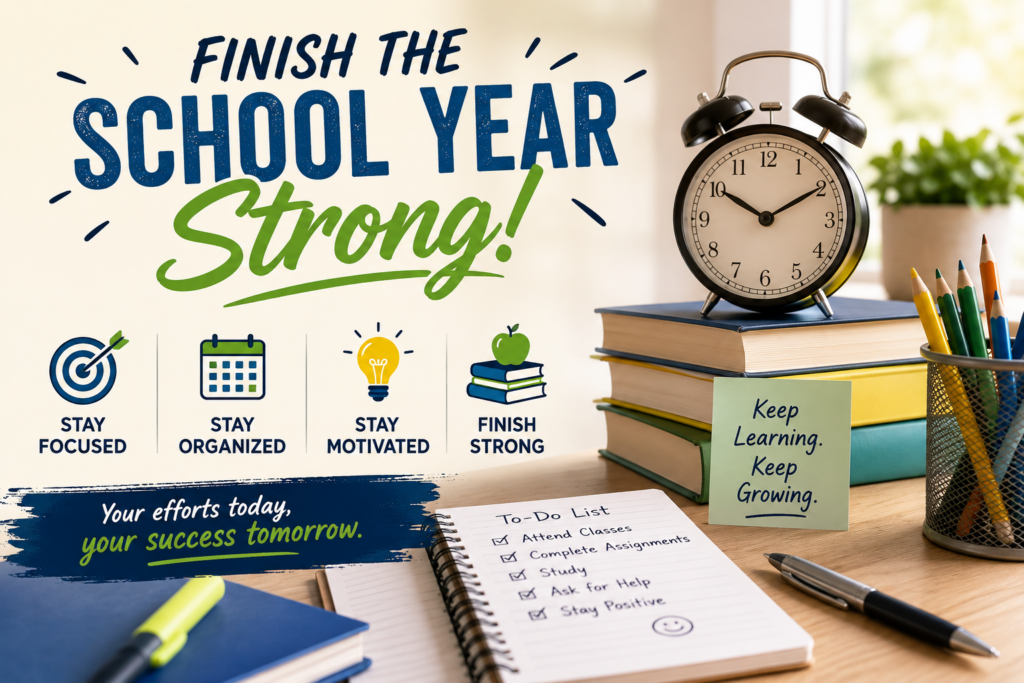
Finishing the school year strong can help students maintain academic progress, build confidence, and prepare for a successful transition into the summer months and the next grade level. Whether a student is excelling academically or working to overcome learning challenges, the final weeks of school provide valuable opportunities to reinforce skills, complete important coursework, and celebrate achievements.
Why the Final Weeks of School Matter
Many students assume that once spring arrives, most of the important learning has already taken place. In reality, schools often continue introducing new concepts, reviewing key skills, conducting assessments, and completing major projects right up until the final days of the school year.
Missing assignments, poor attendance, or reduced participation during this period can have a significant impact on overall performance. The habits developed during the final weeks can also influence how prepared students feel when they begin the next school year.
For students receiving online tutoring, participating in virtual K-12 tutoring, or accessing other forms of academic support, maintaining consistency during this time can help reinforce learning gains made throughout the year.
Common Challenges Students Face at the End of the School Year
The end of the school year can bring several challenges that affect learning and academic performance.
- Decreased Motivation
After months of classes, assignments, and exams, students may begin to feel mentally exhausted. It can become difficult to stay focused when summer activities seem more appealing than schoolwork.
- Academic Fatigue
Students who have worked hard throughout the year may experience burnout. This can lead to reduced effort, procrastination, and difficulty concentrating on important tasks.
- Increased Distractions
Longer days, extracurricular activities, vacations, and social events can compete for students’ attention, making it harder to maintain productive study routines.
- Anxiety About Exams and Transitions
Many students face final exams, standardized assessments, or transitions to a new school or grade level. These changes can create stress and uncertainty that affect academic performance.
Recognizing these challenges is the first step toward addressing them effectively.
Staying Organized During the Final Stretch
One of the most effective ways to finish the school year strong is by staying organized.
Students should keep track of:
- Upcoming assignments
- Project deadlines
- Test dates
- Exam schedules
- Important school events
Using a planner, calendar, or digital scheduling tool can help prevent missed deadlines and reduce stress. Breaking larger assignments into smaller tasks can also make projects feel more manageable.
Strong organizational skills are valuable not only in K-12 education but also in adult education, post-secondary studies, and future careers.
Maintaining Consistent Learning Habits
Consistency remains one of the most important factors in academic success.
Even when motivation is low, maintaining regular learning habits can help students stay on track. This may include:
- Completing homework on time
- Attending classes regularly
- Reviewing notes daily
- Participating in classroom discussions
- Asking questions when support is needed
Students who maintain steady routines often find it easier to retain information and perform well on assessments.
This principle applies equally to classroom learning, virtual learning for K-12 mathematics, virtual learning for K-12 English, and virtual learning for K-12 science programs.
Preparing for Exams Without Last-Minute Stress
Many students wait until the final days before an exam to begin studying. This approach can increase anxiety and reduce retention.
Instead, students should begin preparing early by:
- Reviewing notes regularly
- Practicing sample questions
- Identifying areas of difficulty
- Seeking clarification from teachers or tutors
- Creating study schedules
Short, consistent study sessions are often more effective than lengthy cramming sessions.
Students participating in personalized learning programs or live-instructor-led online learning often benefit from targeted support that focuses on their individual learning needs and goals.
The Importance of Asking for Help
Many students hesitate to seek assistance when they encounter academic challenges. Some may worry about appearing behind their peers, while others may simply not know where to find support.
The reality is that seeking help is a sign of responsibility and commitment to learning.
Support may come from:
- Teachers
- Tutors
- Family members
- Mentors
- Community programs
- Educational organizations
Access to online tutoring and inclusive learning support has made academic assistance more accessible than ever, helping students receive guidance when they need it most.
Staying Engaged Until the Last Day
Engagement plays a critical role in student success.
Students who actively participate in lessons are more likely to retain information, develop confidence, and achieve stronger outcomes. Engagement can be maintained by:
- Setting short-term goals
- Celebrating progress
- Connecting learning to personal interests
- Participating in collaborative activities
- Remaining curious about new topics
Strong engagement is especially important for students participating in English Language Tutoring (ESL), French Language Tutoring, and other specialized learning programs where skill development depends on consistent practice.
Preparing for Summer Learning
Finishing the school year strong does not mean learning must stop once summer begins.
In fact, the transition into summer presents an opportunity for students to continue building skills while exploring new interests. Summer learning can help prevent learning loss and support long-term academic growth.
Activities may include:
- Reading regularly
- Practicing math skills
- Participating in enrichment programs
- Exploring new hobbies
- Developing workplace and communication skills
Many students also benefit from skills training, workplace & soft skills training, and other enrichment opportunities that build confidence and prepare them for future academic and career success.
Supporting Every Learner
Every student’s educational journey is different. Some learners may be preparing for final exams, while others may be developing foundational skills or overcoming learning gaps.
The goal is not perfection but progress.
Maintaining focus, completing assignments, staying engaged, and seeking support when needed can help students finish the school year with confidence and momentum.
Whether learning takes place in traditional classrooms, through virtual K-12 tutoring, within Indigenous communities, or through other forms of live-instructor-led online learning, the final weeks of school offer valuable opportunities for growth.
Conclusion
The final weeks of the school year are more important than many people realize. They provide an opportunity to reinforce learning, strengthen study habits, complete important coursework, and prepare for future success.
By staying organized, maintaining consistent routines, seeking support when necessary, and remaining engaged in learning, students can finish the school year strong and enter the summer months with confidence.
Every lesson completed, every assignment submitted, and every challenge overcome contributes to long-term success. Finishing strong today helps build the foundation for future achievements in school, work, and life.