
Why the First Few Weeks of School Matter More Than You Think
A new school year often feels like a fresh start. Students enter new classrooms, meet new teachers, adjust to different schedules, and begin working toward new academic goals. While much of the attention around back-to-school season focuses on preparing for the first day, what happens during the weeks that follow can be even more important.
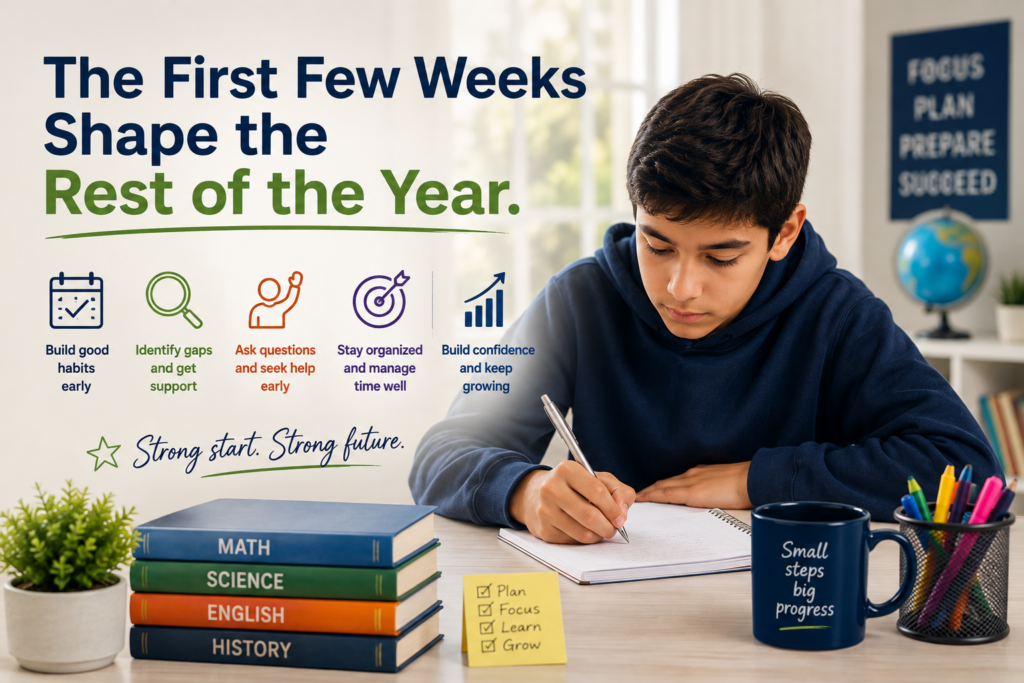
The first few weeks of school establish patterns that can influence the rest of the academic year. Study routines begin to form, teachers introduce new expectations, students discover which subjects may be challenging, and early learning gaps can become more noticeable.
Starting strong does not mean students need to understand everything immediately. It means establishing the habits, support systems, and confidence needed to continue making progress throughout the year.
Early Habits Can Shape the Entire School Year
Returning to a structured academic schedule after summer can take time. Students suddenly have classes to attend, assignments to complete, activities to manage, and deadlines to remember.
Establishing consistent routines early can make these responsibilities easier to manage.
Simple habits such as reviewing class notes, completing assignments on time, organizing school materials, and maintaining a regular study schedule can prevent workloads from becoming overwhelming later.
Consistency is especially valuable because academic success is rarely the result of one intense study session. Much like developing a skill in sports or music, learning improves through regular practice.
Students participating in online tutoring or virtual tutoring can also benefit from establishing consistent session schedules early in the year rather than waiting until academic difficulties become more significant.
The Beginning of the Year Can Reveal Learning Gaps
Every new grade builds upon knowledge developed previously.
A student beginning a new mathematics course, for example, may quickly discover that concepts from the previous year are essential for understanding new material. Similar challenges can occur with reading comprehension, writing, science, and other subjects.
These early difficulties do not necessarily mean a student cannot succeed. They may simply indicate that certain foundational concepts need additional reinforcement.
Identifying these gaps early provides more time to address them before new material begins to accumulate.
Assessments, teacher observations, academic progress tracking, and personalized learning can help determine where additional support may be useful. Once specific areas of difficulty are identified, instruction can focus on strengthening those skills instead of reviewing material the student already understands.
Asking for Help Early Makes a Difference
Students sometimes wait until they receive a poor grade or begin falling behind before asking for help.
By that point, one misunderstood concept may have developed into several.
Encouraging students to ask questions early can prevent small challenges from becoming larger academic obstacles. Support may come from teachers, tutors, family members, educational assistants, mentors, or community programs.
Through live instructor-led online learning, students can also receive real-time feedback, ask questions, and work through difficult concepts with an educator instead of struggling independently.
Seeking support should be viewed as part of the learning process. Even strong students encounter topics that require additional explanation or practice.
Early Success Can Build Academic Confidence
Confidence has a significant influence on how students approach learning.
A student who begins the year believing that they are “bad at math” or “not a strong reader” may hesitate to participate, attempt challenging questions, or ask for assistance.
Early successes can begin changing that mindset.
Understanding a difficult concept, completing an assignment independently, improving a skill, or receiving positive feedback can help students recognize their own ability to progress.
This is one of the benefits of personalized learning. When instruction is matched to a student’s current abilities and learning needs, challenges can remain achievable rather than overwhelming.
Over time, these small successes can help students become more independent and willing to take on increasingly difficult work.
Organization Reduces Academic Stress
Academic stress is not always caused by difficult coursework. Sometimes it comes from poor organization.
Forgotten assignments, missed deadlines, misplaced materials, and last-minute studying can quickly create unnecessary pressure.
The beginning of the school year is an ideal time to establish simple organizational systems.
Students can use:
-
Calendars or planners to track deadlines
-
Dedicated folders for different subjects
-
Regular homework and study periods
-
Checklists for larger assignments
-
Organized, distraction-reduced study spaces
These habits become increasingly important as students move through K-12 education and begin managing more complex workloads.
Organization is also a transferable skill. Time management, planning, prioritization, and accountability are valuable in post-secondary education, adult education, and the workplace.
Progress Should Be Monitored Before Report Cards Arrive
A report card should not be the first indication that a student is struggling.
Regularly monitoring progress makes it easier to recognize changes in understanding, participation, assignment completion, and confidence.
Students and those supporting them can periodically ask:
-
Are assignments being completed consistently?
-
Are certain subjects becoming noticeably more difficult?
-
Is the student comfortable asking questions?
-
Are study routines working?
-
Is additional practice or support needed?
Progress tracking is particularly useful in virtual tutoring because instruction can be adjusted as a student’s needs change.
Academic support is most effective when it is proactive rather than simply a response to poor results.
Academic Skills Aren’t the Only Skills Being Developed
The beginning of a school year also provides opportunities to strengthen skills that extend beyond academics.
Students are continually developing abilities such as:
-
Communication
-
Problem-solving
-
Time management
-
Collaboration
-
Adaptability
-
Critical thinking
-
Responsibility
These skills influence success in classrooms, relationships, post-secondary education, and future careers.
Programs involving skills training and workplace & soft skills training can further develop these abilities, helping learners understand that education is not only about grades or completing coursework.
Schools, educational organizations, and Indigenous communities can also play an important role in creating supportive learning environments where students have opportunities to develop both academic knowledge and practical life skills.
Starting Strong Doesn’t Mean Starting Perfectly
There will always be an adjustment period at the beginning of a new school year.
Students may need time to understand a teacher’s expectations, become comfortable with classmates, rebuild study routines, or adapt to more challenging coursework.
The goal is not perfection during the first few weeks.
The goal is momentum.
Students who establish productive routines, recognize challenges early, seek support when needed, and monitor their progress create a stronger foundation for the months ahead.
Conclusion
The first few weeks of school may represent only a small portion of the academic calendar, but their impact can extend throughout the entire year.
Early routines can improve organization. Early assessments can reveal learning gaps. Early support can prevent students from falling behind. Most importantly, early progress can build the confidence students need to approach new challenges with a positive mindset.
Whether students are learning in traditional classrooms, through online tutoring, live instructor-led online learning, or other forms of educational support, starting the year with consistency and clear goals can make a meaningful difference.
At Progressive Learning Academy, we believe effective learning is proactive, personalized, and measurable. Through online tutoring, personalized learning, academic assessments, and ongoing progress tracking, learners can receive the support they need not only when challenges arise, but from the very beginning of their learning journey.